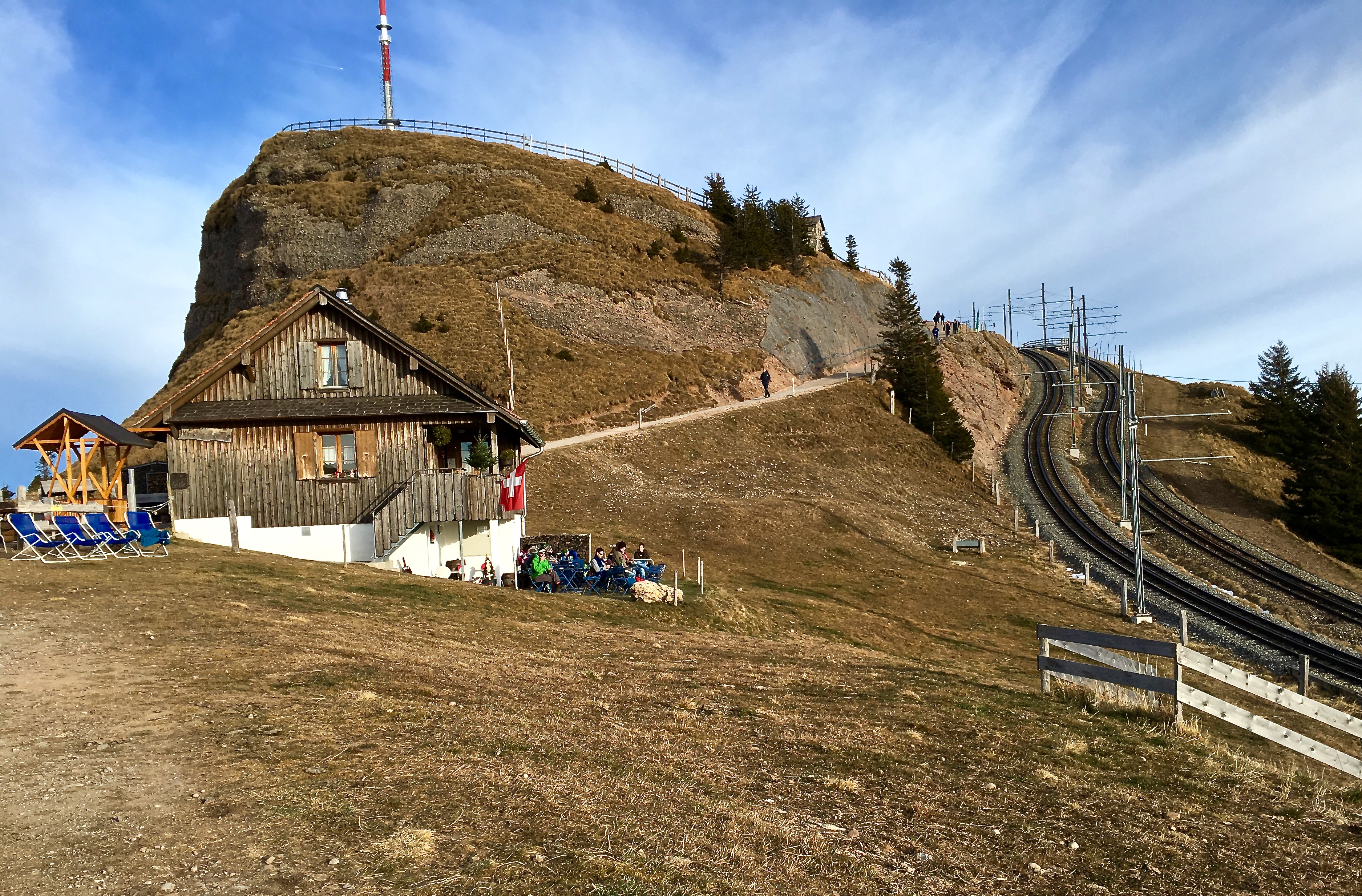

Here’s a view of Rigi’s highpoint. Look closely, and you can see how the mountain got its name. See the layers of pebbly, conglomerate rock in the big hump? “Rigi” means “stripes, rows, or furrows” in High German, a reference to the alternating layers of limestone and sandstone laid down by an ancient sea. Mt. Rigi (and the Alps in general) formed when Africa and the combined continents of Europe and Asia (Eurasia) bumped up against each other. One continental plate slide beneath the other, lifting it up. And voila, mountains! Glaciers aided uplift in shaping the mountains.
 A Newbie in Norway